
EV Charging Solutions for Port Authorities and Marine Terminal Operators
Ports and maritime terminals are among the most demanding environments for EV charging infrastructure. Salt air, extreme temperatures, wind and spray, not to mention heavy freight traffic and 24-hour operations, create conditions that drastically shrink the margin for error for any type of equipment installation. Add the scale and variety of equipment that might require charging, which includes Class 8 drayage trucks, yard tractors, cargo-handling equipment, and public-facing terminal vehicles, and the requirements amp up. The challenge is finding equipment that is both robust and versatile to handle this demanding scenario.
BTC POWER designs and manufactures EV charging systems built to meet exacting environmental and operational conditions, NEMA rated, and tested across a temperature range of -40°C to 70°C. BTC charging installations are backed by 98% uptime based on operational data and a responsive US-based service team.

Charging Solutions for Different Port Applications
Port electrification isn’t a single infrastructure problem. It’s several distinct charging use cases operating in parallel, each with different power requirements, dwell times, and duty cycles.
Drayage and Class 8 Trucks
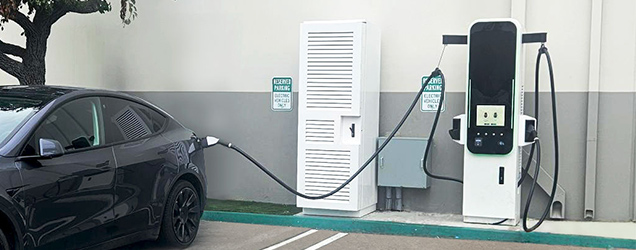
Electric Class 8 trucks arriving and departing on tight schedules require high-power DC fast charging that can deliver a meaningful charge in a limited window. BTC POWER’s Gen 4 All-in-One DC fast charger delivers up to 180 kW per unit, supports simultaneous dual-vehicle charging, and includes an optional 25-foot cable designed for larger vehicles.
For gate complexes and truck staging areas handling multiple vehicles simultaneously, the DC Split System delivers up to 360 kW from a single centralized power cabinet serving multiple dispensers, reducing electrical infrastructure costs while maintaining the throughput drayage operations require. Both systems are OCPP 2.0.1 Core Certified, enabling integration with fleet management and telematics platforms operators already use.


Yard Tractors, Forklifts, and Cargo Handling Equipment
Port cargo equipment typically operates on shift-based cycles, returning to a depot yard between shifts with several hours of dwell time. This profile is well-suited to depot-based Level 2 charging. BTC POWER’s AC Level 2 product family delivers up to 80 amps per port in single and dual-port configurations. Robust construction includes NEMA 3R outdoor housing, rated to withstand rain, salt air, wind-driven debris, and temperature extremes common to marine environments. Modular architecture supports phased expansion as electric equipment fleets grow.
Terminal Employees and Shift Workers
Employee parking areas at port facilities support long dwell times across 8- to 12-hour shifts, making Level 2 AC chargers a cost-effective option. The L2 MaX dual-port configuration maximizes parking real estate at established facilities where space constraints require careful planning.

Public Vehicles, Rideshare, and Visitor Parking
Cell phone lots, terminal passenger pick-up areas, and visitor parking present a different profile: shorter dwell times, mixed vehicle types, and high visibility. A combination of mid-power DC fast charging for quick-turnaround areas and Level 2 for longer-stay zones gives port facility planners flexibility without overbuilding electrical infrastructure in public-facing areas. RFID and credit card authentication options support mixed-use access requirements.
Why Port Authorities Are Investing in EV Charging Infrastructure
Regulatory mandates are accelerating the timeline.
State clean air regulations, including California’s CARB Advanced Clean Fleets rule, which requires accelerated adoption of zero-emission vehicles, are driving port authorities to move from pilot programs to full-scale electrification. Installing scalable, modular hardware now allows ports to phase deployment in line with mandate timelines without rebuilding infrastructure at each stage.
Harsh environments demand hardware that's rated for them.
Standard commercial EV chargers aren’t built for marine port conditions. BTC POWER’s NEMA 3R-rated enclosures protect against rain, sleet, snow, and wind-blown particulates. All hardware is tested over a temperature range of -40°C to 70°C, which suits equipment operating year-round at waterfront facilities.
Modular architecture protects the initial investment.
Port electrification rarely happens in a single phase. BTC POWER’s Gen 4 product family is designed for field upgrades. The same chassis supports multiple power configurations, and the DC Split System’s centralized power cabinet can serve additional dispensers as operations grow. That modularity reduces the cost of phased expansion and avoids rip-and-replace scenarios when charging demand increases.
Buy America compliance opens access to federal funding.
Port infrastructure projects frequently draw on federal funding programs that carry Buy America requirements. BTC POWER operates a Buy America production facility in Irvine, California, and offers compliant configurations across product lines, including:
- Gen 4 All-in-One DC fast charger (60 to 180 kW)
- DC Split System (up to 360 kW, centralized power cabinet)
- L2 MaX AC charger family (up to 80A, single and dual-port)
Port authorities and public agencies can also access BTC POWER hardware through pre-approved cooperative purchasing programs, including the 791 Purchasing Cooperative, GSA schedule, and NASPO ValuePoint, bypassing the full RFP process where eligible.
Beyond hardware, BTC POWER’s charging systems are built on a software architecture designed for interoperability; supporting real-time grid communication, OCPP-compliant backend integration, and fleet management platforms so port operators can manage their entire charging network from existing systems.
US-based service means accountable support. A single failed charger interrupts operations, and a facility running 24 hours a day cannot absorb extended equipment downtime. BTC POWER’s US-based, in-house service team provides direct access without offshore ticket routing. Aftermarket service training is available both in-house and virtually for port maintenance teams who want to handle routine service internally.
Choosing the Right EV Charging Configuration for Port Facilities
Port electrification involves several distinct use cases operating in parallel, each with different power requirements, dwell times, and duty cycles. The right configuration depends on which vehicles are charging, where they stage, and how much time they have.
Level 2 AC Charging
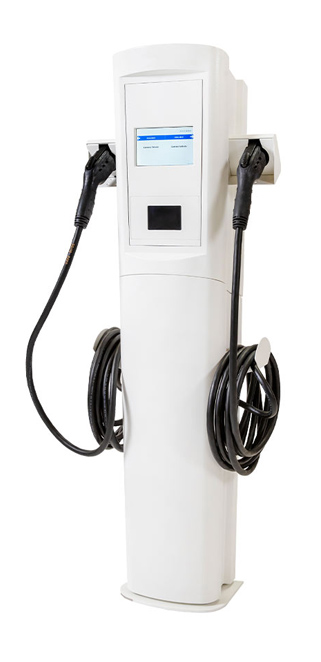
Level 2 AC chargers are the right fit for port applications with extended dwell times and predictable shift structures:
- Depot-based fleet charging: Yard tractors, cargo-handling equipment, and forklifts typically return to a staging area between shifts, providing several hours of dwell time — enough for a full charge on most equipment.
- Employee and shift-worker parking: Eight- to twelve-hour shifts give Level 2 chargers time to deliver a full charge without requiring high-power electrical infrastructure in employee parking areas.
- Lower infrastructure cost: Level 2 installations require less electrical capacity than DC fast chargers, making them the cost-effective choice for high-volume depot environments where throughput is managed by scheduling rather than speed.
- Universal compatibility: Level 2 chargers support all EV models currently in commercial operation, including terminal vehicles and passenger EVs in employee and visitor lots.
BTC POWER’s L2 MaX family delivers up to 80 amps per port in single and dual-port configurations, with NEMA 3R-rated outdoor housing built to withstand salt air, wind-driven debris, and the temperature extremes common to waterfront operations.
Level 3 DC Fast Charging
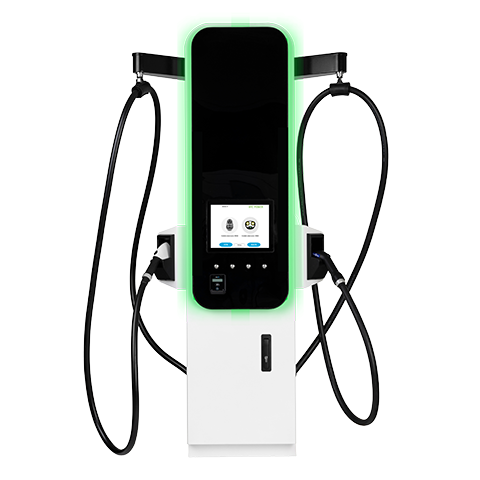
DC fast chargers are the correct choice where dwell time is short or throughput demand is high:
- Class 8 drayage trucks: Electric Class 8 trucks operating on tight schedules cannot sit at a depot charger for hours. DC fast charging delivers a meaningful charge in a limited window, keeping freight moving.
- Gate complexes and truck staging areas: High-throughput zones handling multiple vehicles simultaneously benefit from the DC Split System’s centralized power cabinet, which serves multiple dispensers at up to 360 kW total output — reducing electrical infrastructure cost without sacrificing throughput.
- Public-facing and short-stay areas: Cell phone lots, visitor parking, and passenger pick-up areas serve vehicles with short dwell times and unpredictable arrival patterns. DC fast charging handles that profile where Level 2 cannot.
- Future-proofing: BTC POWER’s Gen 4 All-in-One is available in 60, 120, 150, and 180 kW configurations from the same chassis, allowing ports to deploy at a lower power tier today and upgrade in the field as electrification scales — without replacing hardware.
Both the Gen 4 AiO and DC Split System are OCPP 2.0.1 Core Certified, integrating with fleet management and telematics platforms port operators already use.
Why BTC POWER for Port Applications
BTC POWER designs and manufactures commercial EV charging hardware built for environments where standard equipment fails. With 22,000+ charging systems installed worldwide and 98% uptime based on operational data — not reported estimates — BTC POWER brings verifiable field performance to one of the most demanding infrastructure categories in commercial electrification. US-based engineering, in-house manufacturing at our Irvine, California Buy America production facility, and a US-based service team mean ports get accountable support without offshore ticket routing when equipment needs attention.
Frequently Asked Questions
What type of EV chargers are best for port authorities and marine terminals?
The EV charger types best for port authorities and marine terminal operators would include a mix of DC fast charging and Level 2 AC charging, positioned in the terminal according to application. Class 8 drayage trucks and gate complexes with short dwell times require high-power DC fast chargers. Yard tractors, cargo-handling equipment, and shift-worker parking, or any type of vehicle with a longer dwell time, is better served by Level 2 AC chargers, for a more economical and lower initial infrastructure cost.
Across both types of EV charging installations, marine port conditions demand hardware rated for the environment: NEMA 3R enclosures, wide operating temperature ranges, and construction that withstands salt air, wind-driven debris, and continuous 24-hour operation.
How are ports preparing for fleet electrification and zero-emission regulations?
Many fleet services are incorporating electric charging as they transition to electric vehicles (EVs), and in fact, most fleets expect to switch within five years. Companies like UPS, FedEx, and Amazon are investing in EV fleets and corresponding charging infrastructure. Fleet charging solutions often include a mix of depot-based overnight charging and fast-charging options for longer routes. The adoption of electric charging in fleet services varies by industry and company size, but it’s increasingly common as businesses aim to reduce emissions and operating costs.
What is fleet electrification?
Regulatory pressure is the primary driver for the ports’ preparation for fleet electrification and a zero-emission operating environment. State mandates, such as California’s CARB Advanced Clean Fleets rule, are forcing port authorities to accelerate timelines from pilot programs to full-scale deployment.
Most ports are responding with phased infrastructure buildouts; installing modular, field-upgradable hardware now so charging capacity can expand without rebuilding electrical infrastructure at each stage. Federal funding programs, including NEVI and other IIJA-backed grants, are available for qualifying port infrastructure projects and typically require Buy America-compliant equipment.
What should port operators look for in commercial EV charging infrastructure?
When considering installation of commercial EV charging infrastructure, port operators should consider environmental durability, service accountability, uptime ratings and modular design. For example, standard commercial chargers aren’t built for waterfront conditions, so an initial consideration should be a spec for NEMA 3R enclosures and wide-temperature-range testing as a bare minimum. From there, US-based service, field-upgradable hardware, and industry-leading uptime should help guide the purchase decision between equipment that meets port facility needs and equipment that causes unnecessary downtime.