
Apartments/Condominium Complexes
Residents of apartments and condo complexes face a complex and confusing landscape when faced with finding an EV charger to charge their vehicles. Their main dwell time is either at work or home, leaving finding a commercial EV charger their main source of charging.
EV charging amenities vary widely depending on the region of the country where the complex is located, with greater availability of EV charging installations in facilities on the West Coast compared to the Midwest, for example.
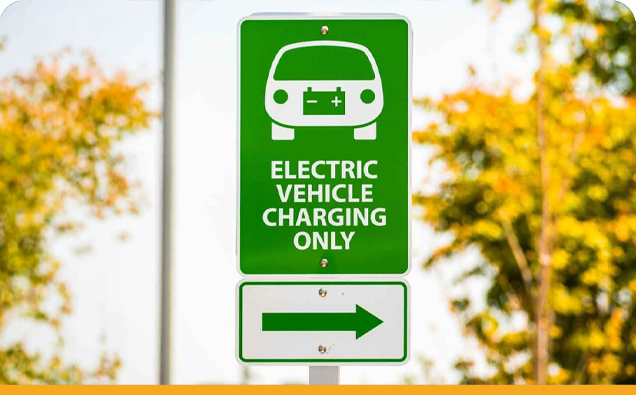

Regulations also differ depending on whether the apartment or condominium is located in California or Kansas. California issued new building codes that will require EV chargers in most overnight parking spots for multi-family developments, starting in 2026. Other states have passed “right to charge” laws, and building owners can anticipate these regulations will spread.2
What landlords or owners are advised to do is future-proof buildings and facilities by anticipating a rise in demand and pricing out the installation now. This will allow landlords and owners to stay on track with the expected adoption rate of EVs.
As Bloomberg NEF projects electric vehicle sales to exceed 60% of all auto sales by 2035, these statistics, combined with changing building codes, put pressure on property managers and developers to provide reliable EV charging solutions. Installing the right charging infrastructure has become an essential feature to attract and retain residents in modern multi-family properties.
Why install apartment and condominium EV chargers?
- Meet essential resident needs: With over 80% of EV charging occurring at home or work3, residential charging access is crucial. For apartment and condo dwellers, on-site charging might serve as their primary or only charging option.
- Attract and retain quality residents: Installing EV chargers significantly improves property desirability and helps attract premium tenants.
- Create new revenue streams: Properties can generate additional income by implementing fee-based charging services. Options include premium parking rates for EV spaces, charging session fees, and even public access during off-peak hours.
- Future-proof your property: Early adoption of EV charging helps properties stay ahead of emerging building codes and positions them competitively in the evolving real estate market.
- Build property value: As EV adoption grows, properties with established charging capabilities command premium rates and attract longer-term residents, potentially increasing both property value and rental income.
- Reinforce corporate/brand image: On-site EV charging demonstrates a tangible commitment to environmental stewardship. This visible investment in green infrastructure helps properties achieve sustainability certifications, meet ESG targets, and appeal to environmentally conscious residents, building a brand reputation within the multi-family dwelling place community.
- Premium apartment values: Just like renters will pay more for apartments with in-unit laundry facilities or gourmet kitchens, EV charging stations are another premium amenity.
Selecting the right charging solution for your property
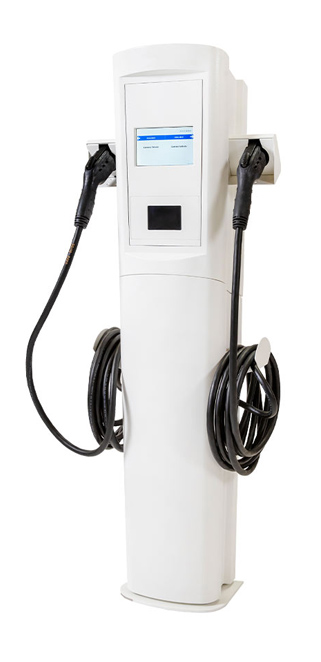
Level 2 EV chargers
Level 2 EV chargers are an excellent choice for most partment and condominium properties:
- Cost-effective: They require significantly lower initial investment and operational costs compared to DC fast chargers, making them ideal for large-scale residential complexes with multiple parking slots.
- Overnight charging efficiency: With 6-8 hour charging times, they perfectly match typical overnight parking patterns of residents, providing a full charge by morning.
- Universal compatibility: Level 2 chargers work with all EV models currently on the market, ensuring your investment serves all residents regardless of their vehicle choice.
- Lower power requirements: Their reduced electrical infrastructure needs make an L2 level charger easier to install across multiple parking spaces.
- Dual charging capabilities: Level 2 chargers can be outfitted to serve more than one vehicle at a time, increasing the cost-effectiveness of installation when parking spaces are adjacent to one another.

Level 3 EV chargers
L3 DC fast chargers While they require a higher initial investment for installation, DC fast chargers can serve specific roles in residential settings. A combination of Level 2 and DC fast chargers, strategically located, can serve different purposes:
- Rapid charging: Level 3 DC fast chargers provide 80% charge in as little as 15 minutes, ideal for guest parking areas and short-term visitor use.
- Premium amenity: Offers a luxury charging option that can command premium rates and attract high-end residents.
- Emergency backup: Provides quick charging options for residents needing rapid charging in emergencies.
- Revenue potential: A DC fast charger can be configured to accept payment from outside entities or non-residents during non-peak or off hours, for mixed-use developments that combine living quarters with retail space, or in public spaces such as a guest visitor area or central leasing office.
Apartment EV charger strategic implementation considerations
When installing EV charging solutions for multi-family properties, carefully consider how the charging infrastructure will align with your existing parking configuration.
Properties with assigned parking spaces benefit most from dedicated charging stations that can be included as a perk or amenity as part of the rent. Spaces with shared parking areas should focus on community-based or clusters of charging stations that provide flexible or mixed-use access in a dedicated location in a parking lot or parking area.
In this instance, payment options can also be customized. For example, in a community that mixes residential units with retail spaces, residents can be supplied with a code to enter for free charging up to a predetermined amount based on lease agreements, while visitors or guests can be directed via a touchscreen to appropriate payment options.
Apartment EV charger infrastructure planning fundamentals
Successful EV charging implementation requires a thorough evaluation of several infrastructure components.
- Begin by assessing your property’s electrical capacity and determining whether upgrades will be necessary to support the charging network.
- Location selection should prioritize accessibility while maintaining compliance with ADA requirements and safety standards.
- Additionally, ensure that your design incorporates robust network connectivity for management systems.
- Install systems with modular, scalable capabilities or those with sufficient power capacity to enable future expansion as demand grows.
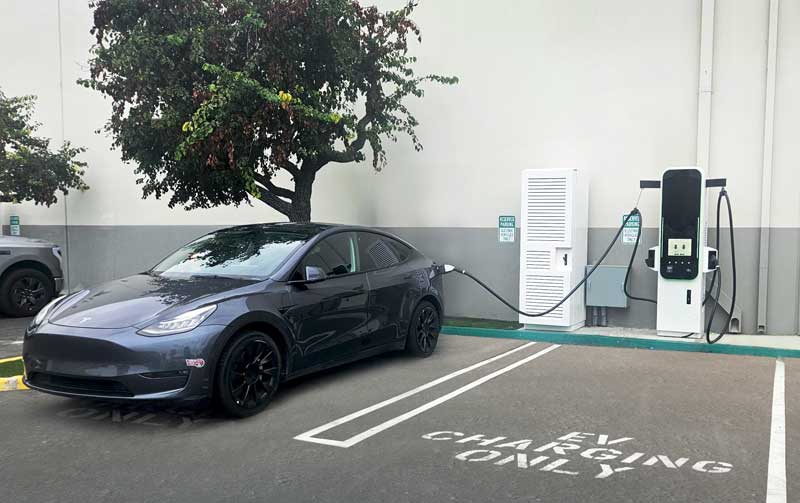
Advanced management and billing capabilities
Today’s EV charging systems offer comprehensive management features that streamline operations and enhance the user experience. Modern platforms enable precise tracking of individual usage patterns and automated billing processes while providing flexible payment options for both residents and visitors.
Property managers can benefit from remote EV charging software monitoring capabilities that deliver real-time maintenance alerts and detailed usage analytics. Furthermore, integrated energy load management and scheduling tools help optimize power consumption and reduce operational costs.
Consider exploring available incentives and funding opportunities to offset implementation costs and boost project feasibility. Find more information about funding options here.
Ready to increase your property with EV charging solutions? Contact BTC POWER, North America’s leading commercial EV charger manufacturer, to develop a customized charging strategy for your multi-family property of apartments, condominiums, or mixed-use developments.
Frequently Asked Questions
Should apartment complexes install EV chargers?
Yes, an apartment complex should install EV chargers. The case for installation gets stronger every year: over 80% of EV charging happens at home or work, so for renters without a garage, on-site charging is often their only realistic option.
Beyond resident demand, chargers function as a premium amenity that can attract and retain tenants, and properties that install early get ahead of building codes like California’s requirement for EV-ready overnight parking in multi-family developments.
How much does it cost to install EV chargers at an apartment complex?
This depends heavily on charger type, electrical capacity, and how many spaces you’re wiring at once. Level 2 chargers cost meaningfully less to install than DC fast chargers, which is part of why L2 is the default recommendation for large-scale multifamily EV charging.
Can a landlord deny an EV charger installation request?
In many states, no, a landlord cannot automatically deny an EV charger installation request. “Right to charge” laws are spreading and give residents some legal footing to request EV charging installation, and California’s building code changes push in the same direction by mandating EV-ready parking in new multi-family construction starting in 2026.
What level of EV charger is best for an apartment complex?
For most uses at an apartment complex, if serving residents’ personal vehicles, Level 2 is the standard answer. This type of charger provides a 6-8-hour charge time that aligns naturally with longer dwell times, such as overnight parking, and AC chargers work with every EV model on the market. Some properties layer in a Level 3 charger for guest parking or emergency top-offs, since DC fast charging can deliver 80% charge in about 15 minutes, but that’s typically a supplement to L2, not a replacement.
Do EV chargers significantly increase a building’s electric bill?
EV chargers do not necessarily increase a building’s electric bill significantly, depending on how well the system is designed and managed. For example, in a residential setting, adding Level 2 AC chargers for a multifamily unit, load management, and scheduling tools helps optimize when and how the power is drawn. These methods can keep costs more predictable. Businesses that install EV charging infrastructure factor energy costs into their operations and can offset them because electric vehicles require fewer parts and less maintenance than fossil-fuel vehicles.